
Ahh, the joy of planting fall bulbs! It’s one of the most exciting times for us at The Starter Farm in Santa Ynez, California. We plant thousands of bulbs, tubers and corms each fall and wait with baited breath for the explosion of color that will burst forth, like a floral firework display, in late winter through early spring. Here at the farm, most of our bulbs and corms go into long beds to be cut for our favorite customers, however, we can’t resist tucking a few into our own gardens to enjoy their full spring display. The bulbs on offer, if left to die back naturally, will return year after year to give a lifetime of color that signals the beginning of the spring season. Some of your bulbs will even multiply, offering added delights that can be shared or spread around your garden in years ahead! This is dependent on your soil and climate, so read a head for more details. I am so excited to share with you, Annie’s 2023 collection of fall-planted bulbs that’s full of interesting, hard-to-find, new and classic varieties.
Narcissus
Let’s start with Narcissus! While commonly known as Daffodils, these varieties are not your common supermarket offerings. Narcissus are the workhorse of the spring garden and one of the earliest flowers to emerge from the ground. As an added treat, many Narcissus are fragrant and provide the perfect perfume to cut and bring into your home. Another wonderful quality of Narcissus is deer tend to avoid them. Now let’s talk about these varieties!
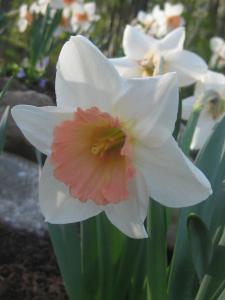
Pink Charm is a fantastic early blooming large-cupped white petaled daffodil that has the loveliest pink salmon inner cup that presents a unique color in the narcissus world. Florists go crazy for them!
If you want a similar variety that has even a softer hue, I would suggest British Gamble. This girl is a bit taller with a frilly edge to her darkened cup with a lighter apricot hue inside. For both selections, cooler weather will bring out darker colors.

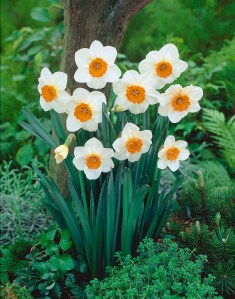
Barrett Browning is an old timey, small-cupped Narcissus. Large white petals with the most interesting red fringed cup that fades to orange at the center. A bit shorter than other varieties offered here, it is an excellent naturalizer that comes back in force every year and excels in warmer climates. At our farm we have relocated them to our gardens. Stem length is a bit shorter than we like for cut flowers, but those petit stems make her perfect for the front of beds or tucked under and in-between larger plants.
Replete is a must grow. This double flowered daffodil is like a firework exploding with its ruffled petal display. Huge flowers with creamy white outer petals and an explosion of soft orange to brighter tangelo inner petals emerge on mid-sized stems. Some of our clients were surprised that these were daffodils! Full, luscious, and always in demand, Replete is an unusual type that will bring you much happiness!

And now, some of my surprise favorite Narcissus. I’ll confess, I was a little suspect of these multi-flowering varieties when I first started planting. They looked different, I was not sure how long they would last when cut and they reminded me more of the common paperwhites you see around the winter holidays. Boy was I wrong. These fragrance monsters are stunners and extremely long lasting in the vase. They fill a room with a lovely soft scent that is like fresh linen combined with strategic dabs of your favorite floral perfume. When bunched, these flowers fill a bouquet that is perfect on its own.

Geranium appears like a soft cloud with perfect small orange cups that look like painted eyes peeping out over the garden. It is like an artist’s rendition of what small daffodils should look like if they wanted a cool contrast between white and lovely orange.
Golden Echo is new to me. A slightly larger flower with one to three flowers. Rumored to be slightly less fragrant, we’ll forgive them that because I love the look of the bright yellow centers fading to a softer cream on the outer petals. I’m thinking this will be an excellent selection to plant in masses.

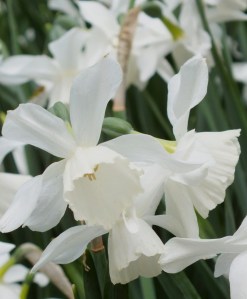
For years I had a mysterious single bunch of nameless, small-cupped, pure-white narcissus with curious petals growing near the house. I was thrilled to unearth their name, Narcissus ‘Thalia’. I am now forever in love. A larger multi-flowered daffodil, the outer petals are unique with their elongated shape, pure white color, and power-packed fragrance. Finding a good pure white narcissus is a challenge but Thalia is a unique variety that will return year after year and multiply fantastically!
Pro Notes for arranging with Daffodils! When cutting single cup varieties, we select stems that have buds which are fully colored, but slightly nodding (aptly called the ‘gooseneck’ stage) for the longest vase life. Multi-stemmed varieties can be picked a bit closer to full bloom as they tend to have a longer vase life. When used as a cut flower, Narcissus can be a beautiful saboteur of her vase companions. Once cut, Daffodils emit a sticky sap that will cause other flowers to wilt when arranged together. You can easily thwart Narcissus’ aims by “bleeding” them out in their own water for a half hour until the sap stops and they can play nicely. You can then arrange them with other spring beauties if you do not recut them.
Ranunculus
Ranunculus are our most anticipated flowers for the season! Ranunculus are often called spring’s peony, with their similarly shallow-cup-shaped flowers that spills forth layers and layers of petals, these blooms beat everyone to the garden and come in a multitude of colors. Ranunculus make excellent cut flowers and should be picked once the buds start to color and are about to explode. Most growers call this the “Marshmallow” stage. This will give you the longest possible vase life and flowers will continue to open after they’re cut. The one exception would be the butterfly varieties. Cut stems when flowers are open.
For gardeners new to the world of fall planted bulbs and corms, Ranunculus are an excellent starting place. They should be shallowly planted at a depth of 1” to 2” in the garden or in containers. Make sure to avoid soils that may sit heavy and wet for long stretches through winter. They will sit dormant through the end of fall and into early winter. You should see green growth pushing in mid to late winter. This can vary depending on growing region and planting times. In zones 9 and 10 bulbs can be left in well drained soils year to year. In colder climates and heavier soils, lift bulbs and overwinter indoors in a cool, dark space with low humidity. If you think your ready to step up your Ranunculus game, I have some grower’s pro tips below.
The LeBelle varieties are the earliest fully petaled bloomers, so they’re a must for extending your season. LaBelle Champagne is amazing for color. It offers a selection of apricots, light rose, muted yellow and the very occasional hot pink. It’s a great mix that provides soft and dreamy colors. The Amandine series is later to bloom and tolerates warmer weather.


Amandine Scarlet is a vibrant replacement for that signature red rose and in some areas will bloom close to Valentine’s Day. It is bold, brassy and a real stand out.
The Tecolote Series is wonderfully unique. With fewer petals, its open face and prominent eye really pop. Tecolote Salmon has that peachy/salmon color that florists and gardeners alike adore. Like an inviting fairytale bursting with charm. The surprising green center to this flower adds to its whimsy and appeal


Tecolote Café is an absolute favorite with burnished red and deep terra cotta coloring just dripping with notes and tomes of coffee.
Half Clone selections are their own animal…a strapping and beautiful animal. These Ranunculus are actually created through a process of combining tissue cultivation and seed production (some horticulture that is a bit above my pay grade). What it gives us is selections that consistently produces robust plants with astonishing bloom rates. The size of the flowers is impressive on solid stems prepared to do some heavy lifting.
Half Clone Iceberg will always be my go-to white ranunculus. It is an outstanding plant with the most amazing pillowy white flowers.
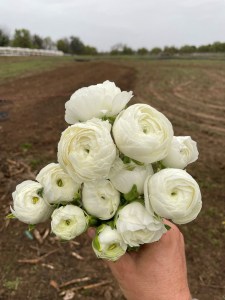

Half Clone Marshmallow is almost her twin but in a soft pink with a hint of green at its center.
Half Clone Juliette is a bolder pink, and perfect for any dreamhouse.
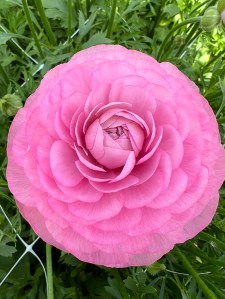

Half Clone Wedding Pastel was just released this year so I’m as eager to try her in the garden as you are, but from what I’ve seen these soft and glamorous wedding tones coupled with the strength and reliability we have come to rely on from this collection will be a flower to love forever.
Butterfly Ranunculus
Lastly the Butterfly Ranunculus. Oh, the butterflies. Commercial growers for years have had access to these fantastic angels. They are just now being offered to the general public and I personally am excited for you! Unlike traditional ranunculus, Butterfly Ranunculus produce multiple flowers on a single branching stem that dances on the breeze. A couple of stems will give you a full bouquet. They add a lightness and air to our arrangements. Did I mention the colors?
Hades is a brilliant multi-petaled red that just screams red rose love.
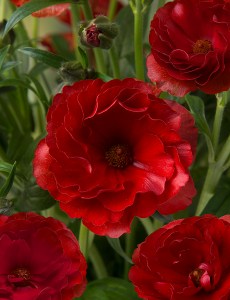

Musa a slightly duskier red that fades and softens like a pair of perfectly, well-worn jeans.
Minoan is a single petaled orange that has this great contrasting darker eye that adds depth to the flower.


And now we have Thiva. This girl was just released to our farm this year. I spied her at our client’s store and had to know her name. I don’t know how she manages to be simultaneously muted yet a richly hued mauvy purple. I can’t wait to grow her myself!
Planting Ranunculus corms 1” to 2” deep in well drained soils will do any gardener just fine, but if you’re ready to do it like the pros, here are a few tips from the Starter Farm. Ranunculus benefit from a process call pre-sprouting. It is the act of hydrating corns and tubers in circulating water for about 6 hours before planting. At the farm we tend to go shorten this for the Butterfly series as we want to make sure not to oversoak these larger roots and cause rot. To help us circulate the water, we use a small water pump and some air stones (check out the fish section of your local pet store for everything you need). We add a diluted compost tea as
we believe it enhances this process. A simpler way to do this is to leave them in a bucket under a barely dripping tap to cause movement and provide oxygen to the water. You may find that using the drip method may add more plumping time to your process. You want the corms to double in size but not break apart. Once soaked we take the corms out of the water, allow them to drip dry and immediately plant them in soil that we amend with some good compost. Once the plants are established, we fertilize with a good and balanced organic fertilizer as ranunculus are heavy feeders. It is recommended you do this whole process just before your planting zone’s first expected frost date. Ranunculus require cooler soil for strong root development. This pre-spouting process accomplishes two things. One it gives you an earlier flowering time and two helps ensure that tubers are properly hydrated to give you the most robust possible growth. It is important to maintain consistent soil moisture during the first two weeks after planting while making sure not to overwater which will cause rot.
There is plenty of other growing information online for all of these varieties if you have further questions about spacing and growing conditions. Happy growing and I hope you too share the joy we have with fall planted bulbs!
Mark Donofrio
Founder and Head Farmer at
The Starter Farm
_________________________________________
Mark Donofrio is a dear friend and an experienced flower farmer, growing a truly envy inducing assortment of flowers that he and his customers use to craft into fantastical bouquets. If you find yourself anywhere near Santa Ynez just a short drive from Santa Barbara on the Central Coast of California, pop into the areas many flower shops and locally owned grocery stores to see his fine craftsmanship in full display. Mark helped us to curate our selection of bulbs this year. He entertained and educated us in equal parts as he treated us to tales of growing, and his lists of bulbs that brought him endless delights as well as the occasional duds (we definitely skipped those). His enthusiasm and craft are an inspiration. To see more of his work visit his website www.thestarterfarm.com or pop onto his Instagram @thestarterfarm/
– Colleen W., Plant Maven



 blog.anniesannuals.com